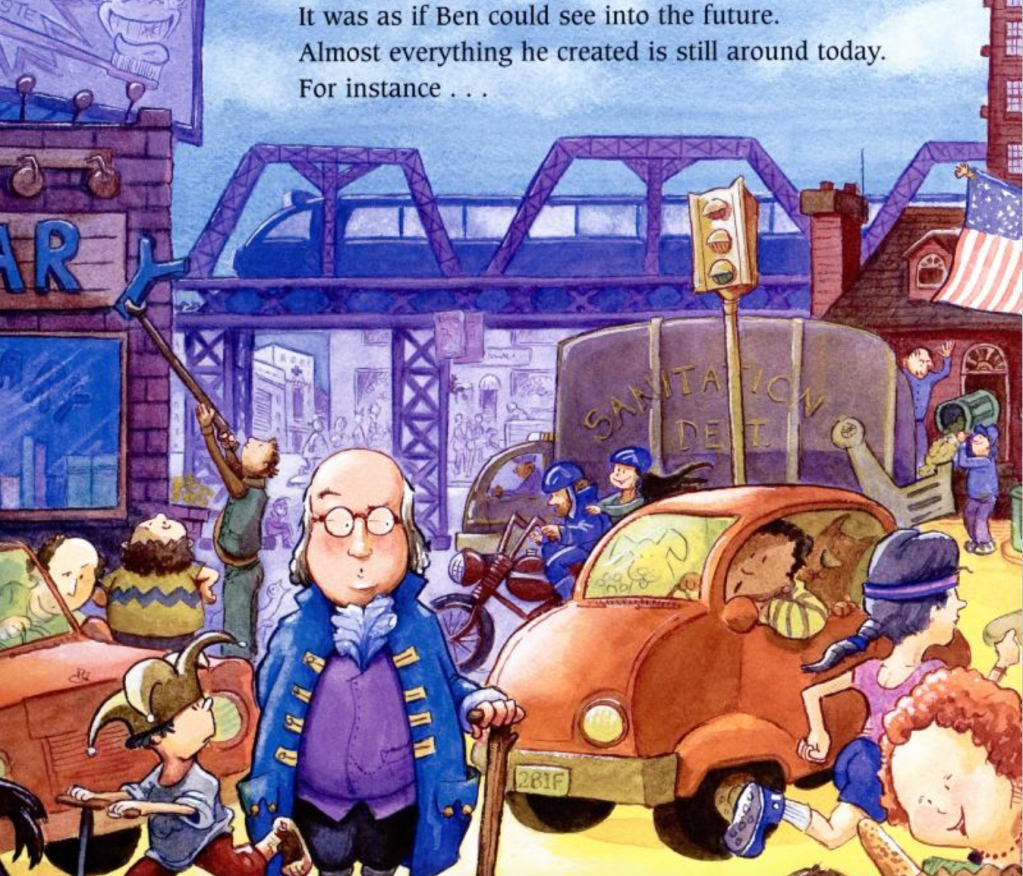
This little picture book is the perfect example of how much fun nonfiction books for kids are nowadays. The talented Gene Barretta, who used to animate for Sesame Street, is the author and illustrator of Now & Ben. Barretta uses a compare & contrast structure to highlight Ben Franklin’s original inventions and how those inventions are still used today, and it is absolutely delightful!
It’s history and science, and it gives little ones the perfect way to see how one person can change the world.
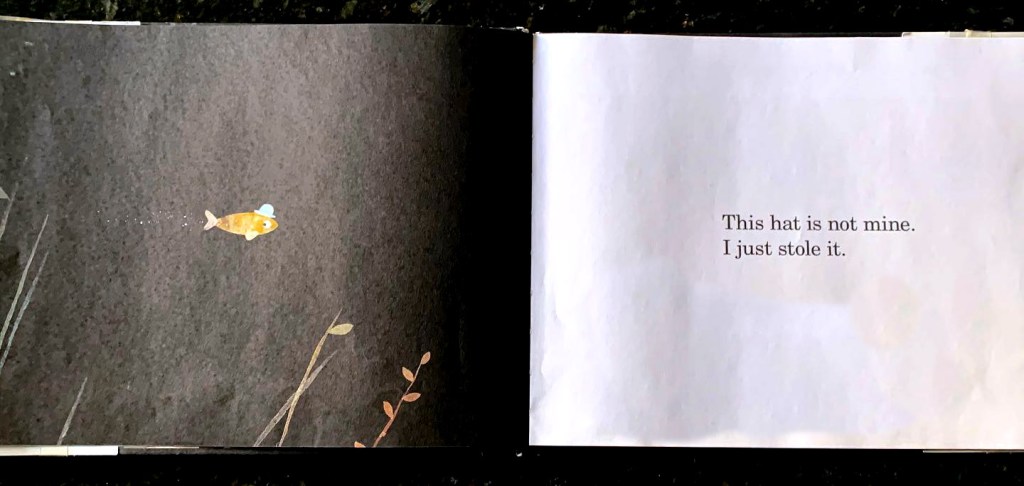
I first read This Is Not My Hat during Covid after an online SCBWI summer conference where I was able to learn from many exceptional children’s authors, including Jon Klassen. He gave a presentation, alongside Mac Barnett, on their successful collaborations on picture books. They emphasized that with picture books, it adds so much to the story when the pictures tell a whole different narrative than the words. At the time, I had never thought about it that way! So simple and brilliant!
This Caldecott-winning book by Klassen is the perfect example. He is the author and illustrator for this story where a little fish tells the reader how he stole a big fish’s hat and has a plan to get away with it! Through tiny details in the illustrations, like the big fish narrowing his eyes, you deduce that things are not quite the way that the little fish thinks they are.
I laughed out loud at the twist at the end, and I hope you do, too! Happy reading!
I LOVE trying new things, especially when it comes to writing. But with all the middle grade projects I’ve been working on, the last thing I needed was a whole new audience to write for. At least that’s what I kept telling myself every time the thought of writing picture books peeked around the corner.
But then I discovered, Storystorm 2021. It’s an annual event where for each day of January, Author Tara Lazar has picture book authors post about generating new story ideas. Their words were so inspiring, it was exhilarating! Lauren Kerstein’s post especially spoke to me. Now picture book writing wasn’t just peeking around the corner, it was sticking its tongue out at me–daring me to give chase!
I couldn’t resist. I immediately put Kerstein’s method to work and came up with a great idea! I couldn’t stop there, so I continued on to draft my first picture book. Picture books are short–500 words or less for fictional stories, so many people think they’re easy to write. But the truth is, this is the very reason they are so challenging. Every word counts, and you have to accomplish a whole lot within that time. Now that picture books had my full attention, I dove headfirst into learning the ropes–taking some online courses, and studying Ann Whitford Paul’s Writing Picture Books.
Another fantastic resource I found is Julie Hedlund’s 12X12 challenge, where the goal is to draft at least one new picture book each month during the year. It has been just the motivation I needed. Not every draft I write works out, but each time I sit down to brainstorm a new one, the anticipation is just like I feel before going to a party. My own little picture book party!